One Year In
One year is not very long. And one year is enough.
First Words
About a year ago, in a small house on a small island in Northern Norway, I decided I would finish a book. Not write one. Many people write things and never finish them. The decision was specifically about finishing. About sending the thing out into the world and letting it become what it was going to become without my permission.
I came to fiction late, and from elsewhere. Before this, there was poetry, there was music. Dark ambient under two names that few people will ever hear. I wrote lyrics for years before I wrote prose, and those lyrics taught me something I did not realize I had learned until I started Krelløy. They taught me about repetition. About the way a phrase, when it returns, becomes heavier than it was the first time. Much of the atmosphere in Krelløy was built that way, with elements that come back changed, with small recurring images and cadences that close in on themselves.
Before the music, there was archaeology. A thesis on fantastic animals in ancient Greek funerary art, hours spent reading about what people put into graves and why. Before that, the forests around Handlová.
Writing had been there the whole time. But I had not yet given it the weight of a decision.
Krelløy was that decision. Some of it was also written for Linnet. That is its own story, and not one for this post.
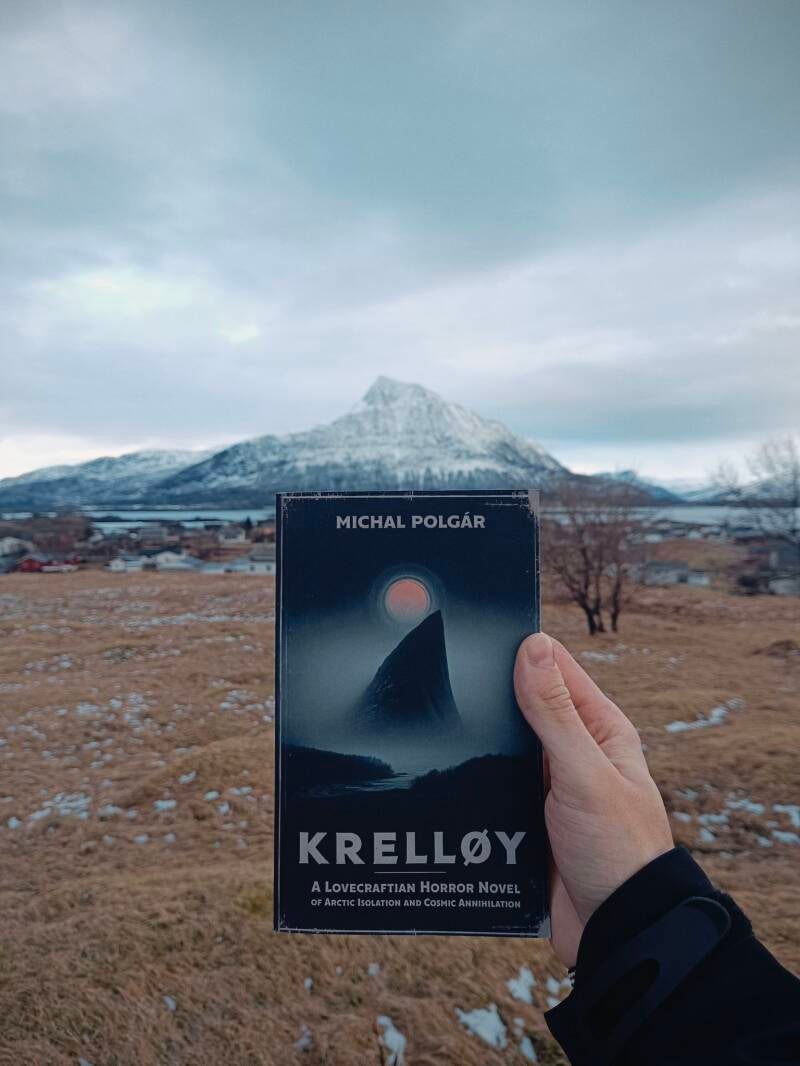
Krelløy, Sørarnøy, Norway, 2026
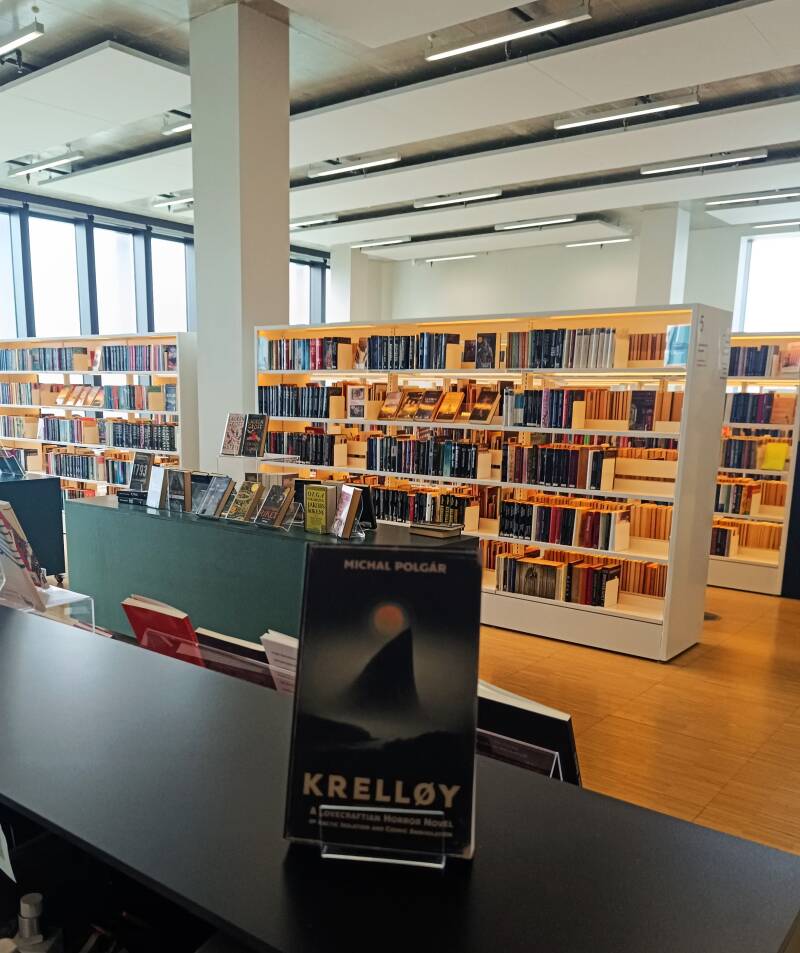
Krelløy in Stormen Bibliotek, Bodø, Norway, 2026
What Came
The book came out in September. The first time I spoke about it publicly was at Pellerie, here on Sørarnøy, in a small room with people I see at the store and on the road. That was the beginning of it being a real thing outside of my own head.
What happened after came slowly. Copies travelled. Readers I will never meet wrote to me about scenes that had stayed with them. Libraries took it onto their shelves. A reviewer in the UK read it carefully and wrote about it carefully, which is a kindness I will not forget. People I have never spoken to began recommending the book to other people I have never spoken to.
It also polarized readers, and I am glad of that. Some people found exactly what I had hoped they would find. Others did not, and were specific about why, and some of what they said was right. A first novel has weaknesses. Mine has its share. I would rather hear the real criticisms than empty reassurance, and I am taking those notes into the next book. A book that divides readers is doing something. That is better than a book no one reacts to.
There is this uncertain feeling that comes after a first novel goes out. You expect noise, or silence, or some great verdict. What you get is more ordinary than that. The book is its own thing now, in other people's hands, and the job has shifted from making it to letting it be.
By now, more than five hundred physical copies are somewhere in the world. There was a guest essay at Ginger Nuts of Horror, and a review in progress there. There are library copies in Gildeskål, in Bodø, Mo i Rana, and one held in the Norwegian national collection. None of this happened the way I expected it to, and most of it happened while I was sitting at the same desk, working on the next book.
Stormen
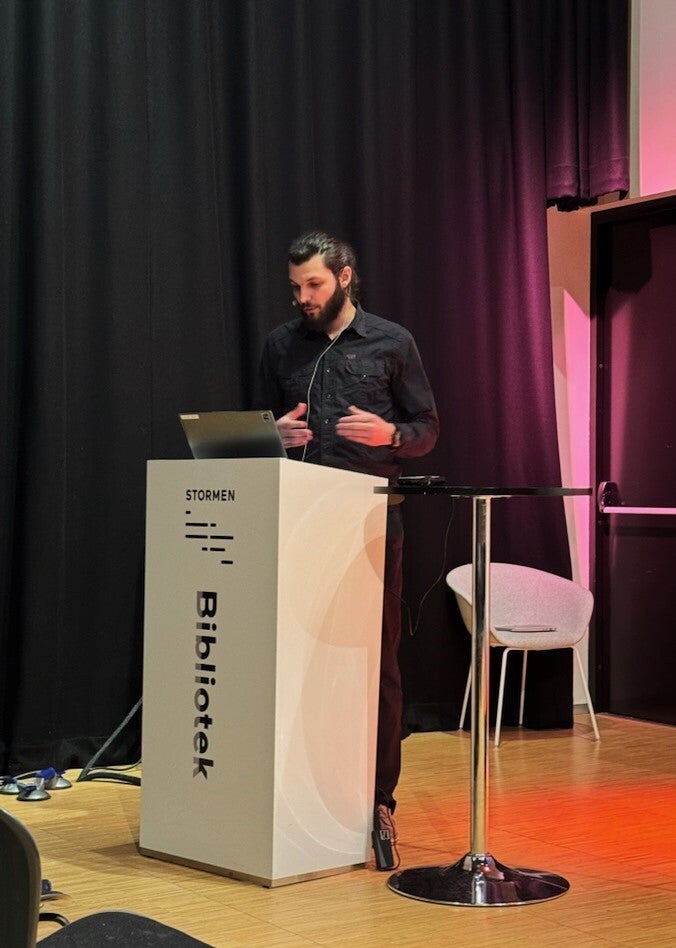
In Bodø, on the mainland north of where I live, there is a library called Stormen. I was invited there in the afternoon to talk about Krelløy and about what comes next.
I am a quiet person. I am not naturally someone who stands in front of other people. Writing is the medium I trust, partly because it gives me time to think, and partly because the rest of me has always been slower than my sentences. So this was a different kind of afternoon for me, and I was nervous in a way I had not anticipated.
The room was warm. People came who I did not expect. One of them was Emmanuel, from Argentina. He was in black, and he was there for both the book and the music. We spoke about dark ambient. We spoke about Burzum. We spoke about the kind of work that lives in a particular corner of a record collection or a shelf, the corner not everyone reaches for. Emmanuel, if you read this: greetings.
≭
That conversation mattered to me. Not because it was long, but because it was the first time at one of these events that I felt readers with similar tastes were beginning to find me, and I was beginning to find them.
Somewhere in the middle of it, I told them, for the first time out loud, about the second book.
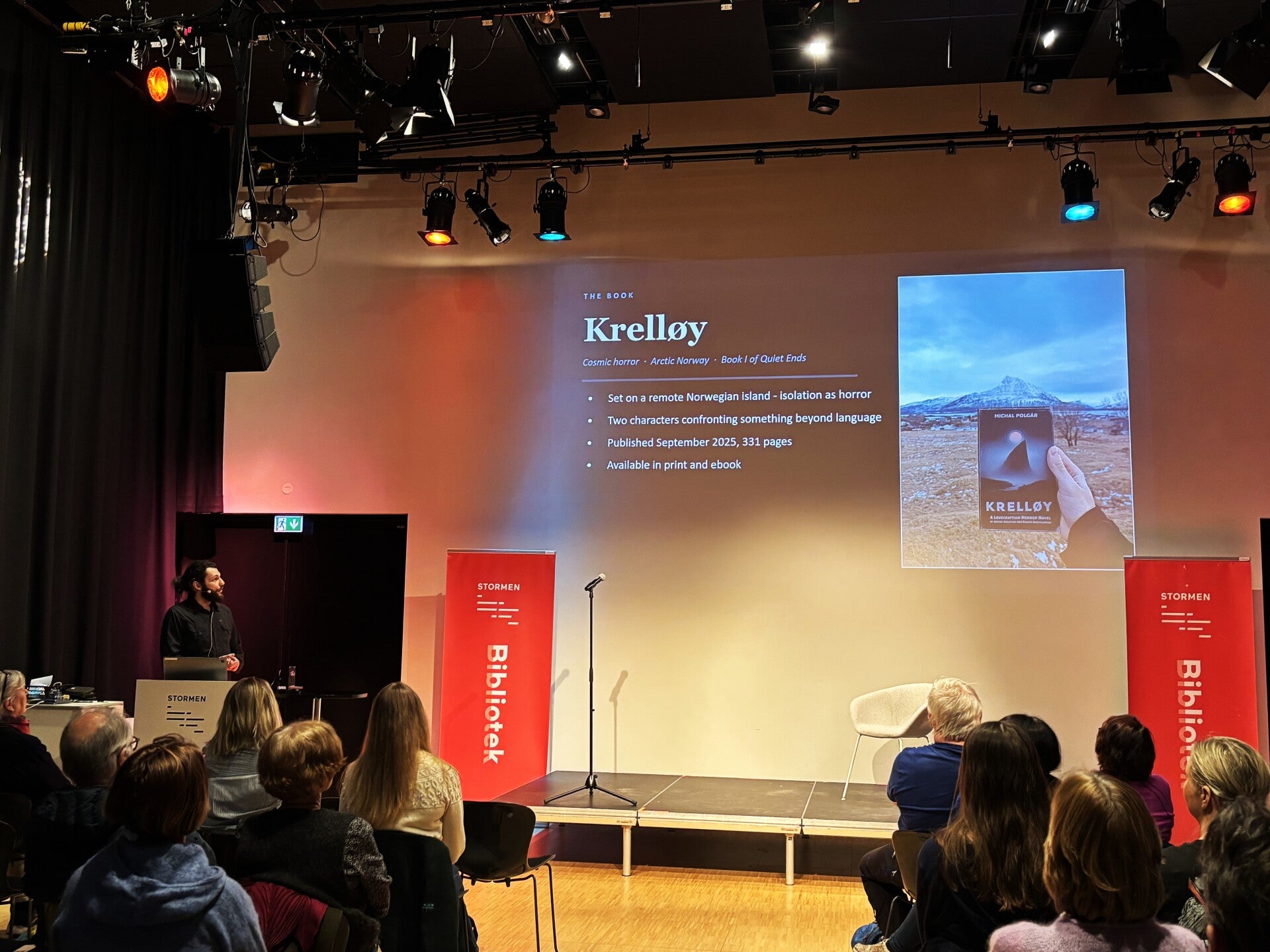
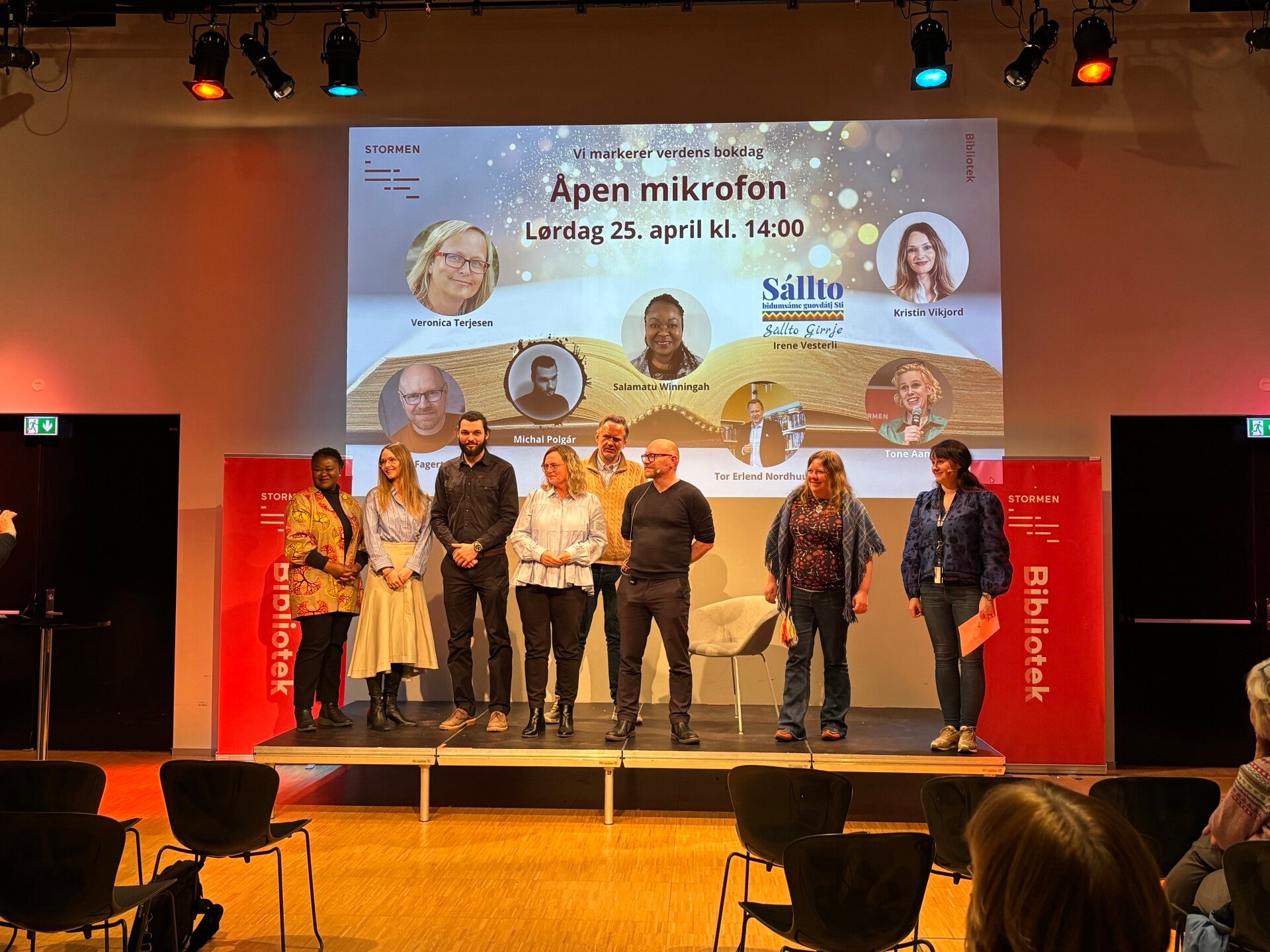
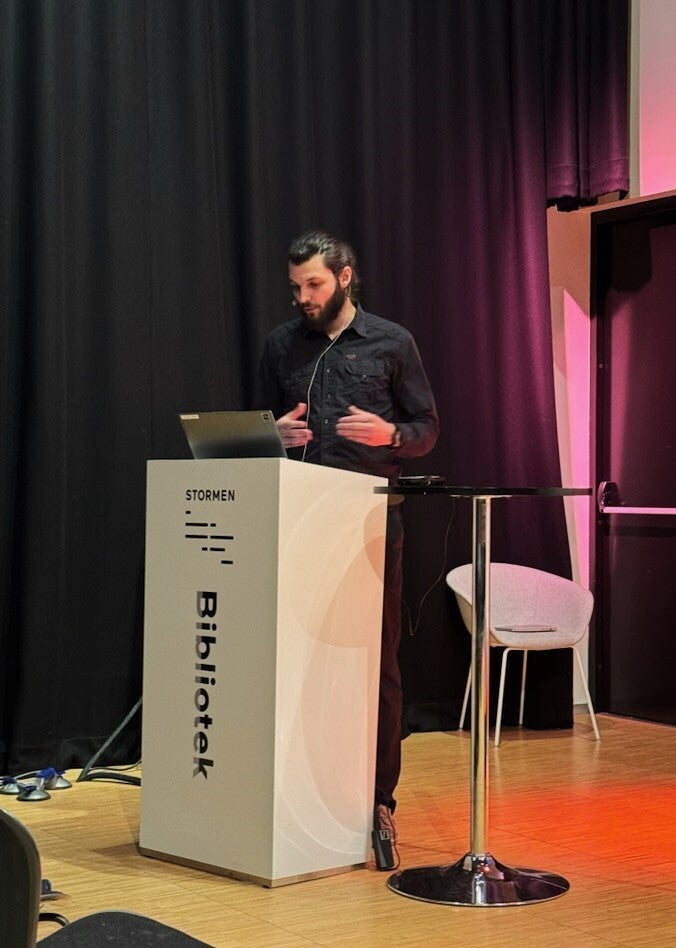
Åpen mikrofon, Stormen Bibliotek, Bodø, Norway, 2026
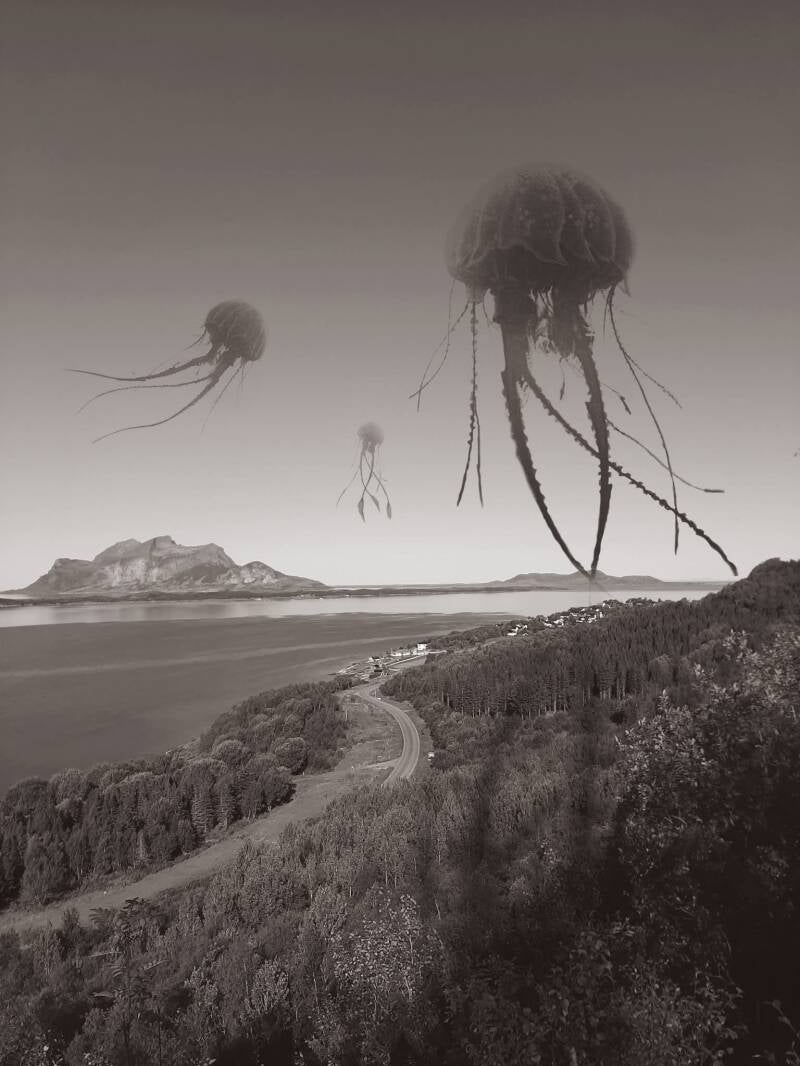
Photomanipulation by Michal Polgár: Inndyr, Gildeskål, Norway, 2025
The Shape
Somewhere across this period in my life, I have understood what I am writing.
I am drawn to large landscapes that do not notice us. To islands and forests where the geography is older than any story we can tell on top of it. To cosmos. To people pressed against something they cannot quite name, watching themselves come apart slowly rather than all at once. To horror that arrives by implication.
I want to write things that stay with people. That readers carry for longer than they expected to.
≭
The next book asks a slightly different question from me. Where Krelløy leaned on repetition and atmosphere, on phrases that come back changed, on long silences in the landscape, the second novel is built on something more difficult for me. It is built on research. On making the horror credible by knowing the things around it. Knowing the trees. Knowing the stars. Knowing the village. Knowing what a person who lives the kind of life I am writing about actually does at four in the morning. I do not want to gesture at credibility. I want to earn it.
I am also trusting my readers more. Saying less. Leaving more out, and not over-explaining the parts I do leave in. That is the part of the craft I am working on hardest right now.
I think I have found the audience I want to write for. Not the largest possible audience. The right one.
Ahead
There will be more books. That is the simplest way to say it, and the truest.
I am writing the second one now. It is set somewhere else, somewhere I knew before I knew Norway, and it asks different questions than Krelløy did. The voice is quieter. The dread arrives differently. I think it is a better book, and I will probably think the same thing about the one that follows it. That is, I hope, how this is supposed to work.
I also want the books themselves to be made well. The Quiet Ends series is moving toward hardcover editions with proper graphic design, the whole sequence treated as a professional series, not a row of books that happen to share an author. If someone takes one of these off a shelf in five or ten years, I want them to feel the care that went into the object as well as the writing.
An announcement will come soon. Not yet, but soon.
For now, only this: one year in, and the decision was the right one. I am where I am supposed to be, doing the thing I am supposed to be doing, and this is a quieter sentence than it sounds.
Thank you for being on this journey with me.

The first notes on the second book, Sørarnøy, Norway, 2025
Add comment
Comments