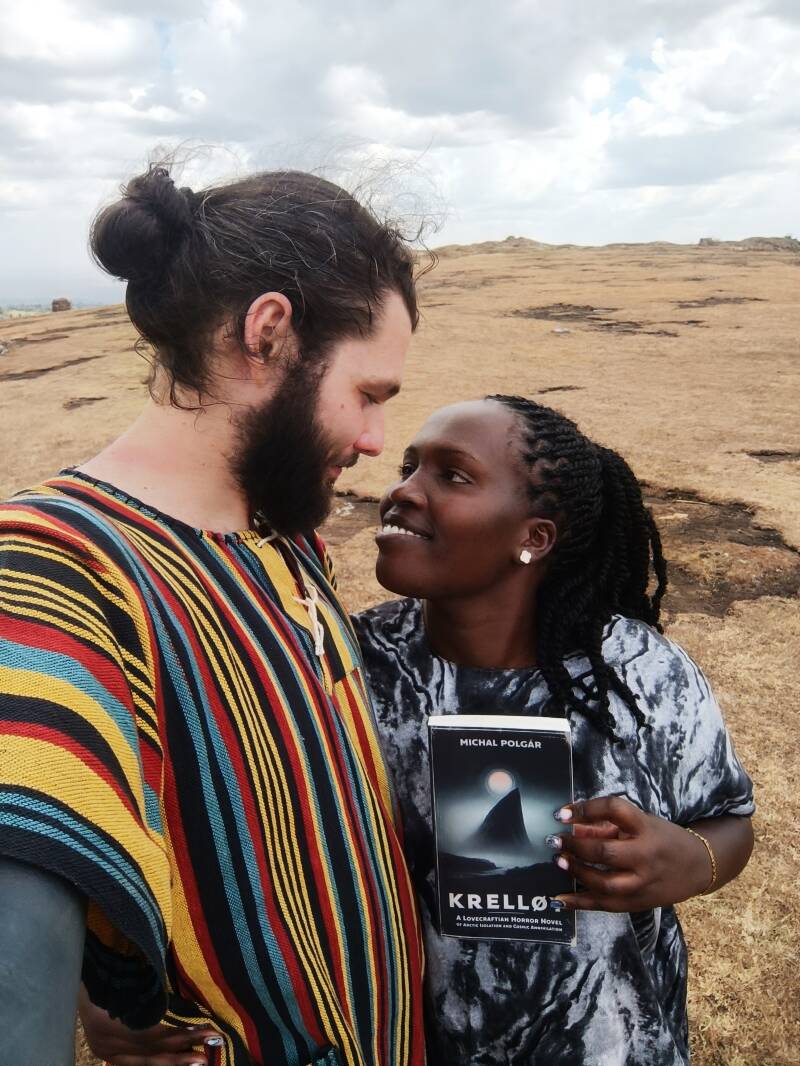
Finding Linnet
A reflective essay by Michal Polgár on travel, connection, and creative inspiration, tracing a personal journey from Norway to rural Kenya.

Lake Turkana, Kenya, 2025
Departure
This was the second time I was flying to see my Linnet, yet it felt less like a journey outward and more like a return. We had planned to meet her parents and family in Kongit, a remote rural place in Kenya that I had already written into Krelløy long before I had ever seen it. Some places arrive in the imagination before they arrive under your feet.
The flight carried me across Ethiopia, a land of origin, layered with history, its written language flowing past me on signs and screens in forms I had never learned to read. Still, there was something quietly familiar in seeing it. It reminded me that language is only one way memory speaks.
≭
When I landed in Kenya, the feeling surprised me by its calmness. I did not feel like I was arriving somewhere new. It felt closer to stepping into a place that had already been stored somewhere inside me.
As the plane descended and the ground came into view, I realized that this journey was not about distance at all. It was about following something that had been quietly forming for a long time, through stories, conversations, and shared imagination, until it finally became real.
Meeting my Linnet
We met at the airport. The moment I saw her walking toward me, everything else dissolved into background noise. We kissed right there, in the middle of the road and moving crowd, not caring about people passing by. For a brief moment, there was only us. After months of distance and voices carried through screens, I was finally standing with my Linnet.
I was mesmerized by her smile, by the warmth of her presence. I loved the way our hands found each other without thought and stayed that way from the very first moment. Her dark skin against mine felt like a quiet affirmation that distance had truly ended. I had crossed continents to be there, and now I was.
≭
The days that followed were filled with closeness and calm joy. Warm kisses, shared laughter, the simple comfort of waking and falling asleep near each other. We had planned our journey to meet her parents after a week in Nairobi, giving ourselves time to settle and adjust before heading deeper into the country.
Nairobi felt strangely familiar to me. I adapted quickly to its rhythm. Paying with M-Pesa, bargaining over prices, learning how the city moves and breathes under the ever-present sun. It was a sharp contrast to the snow and cold I had left behind in Norway, yet it did not feel foreign.
Most importantly, I was not experiencing it alone...

Finally together, Nairobi, 2025
Beneath the Surface
Our time in Nairobi was not limited to the city itself. After settling in, sharing meals, cooking together, racing go karts, visiting the legendary Maasai market and wandering through neighborhoods, we began to look beyond the familiar paths. It was during this time that I discovered a place few people seem to talk about, even among locals. It was called Paradise Lost.
At first, it felt like an unexpected pocket of leisure. A zip line stretching above a lake, rafting on calm water, simple food shared in the shade. But the place held something much older beneath its surface. Hidden within the landscape were natural caves known as the Mau Mau caves, once used during the Stone Age. Entering them felt like stepping into a long, unbroken line of human presence.
The caves extended deeper than I expected. Narrow passages opened into wider corridors, eventually leading to a large chamber where the air felt heavier. Standing there, I could not escape the awareness that people had stood in that same space countless generations before us. Not as visitors, but as inhabitants. The sense of continuity was powerful and unsettling.
Nearby, a natural waterfall carved its way through the rock. We walked behind it, close to the cliff face, water falling beside us. The sound muted everything else, leaving only movement and breath. It was a place where time felt less precise.
≭
What surprised me most was how calmly Linnet moved through it all. She was curious, steady, present. There was no fear in her steps, only interest and openness. Watching her explore those spaces with such ease filled me with a quiet admiration. In that moment, I realized how deeply I trusted her, and how proud I was to walk beside her through places shaped by both nature and history.


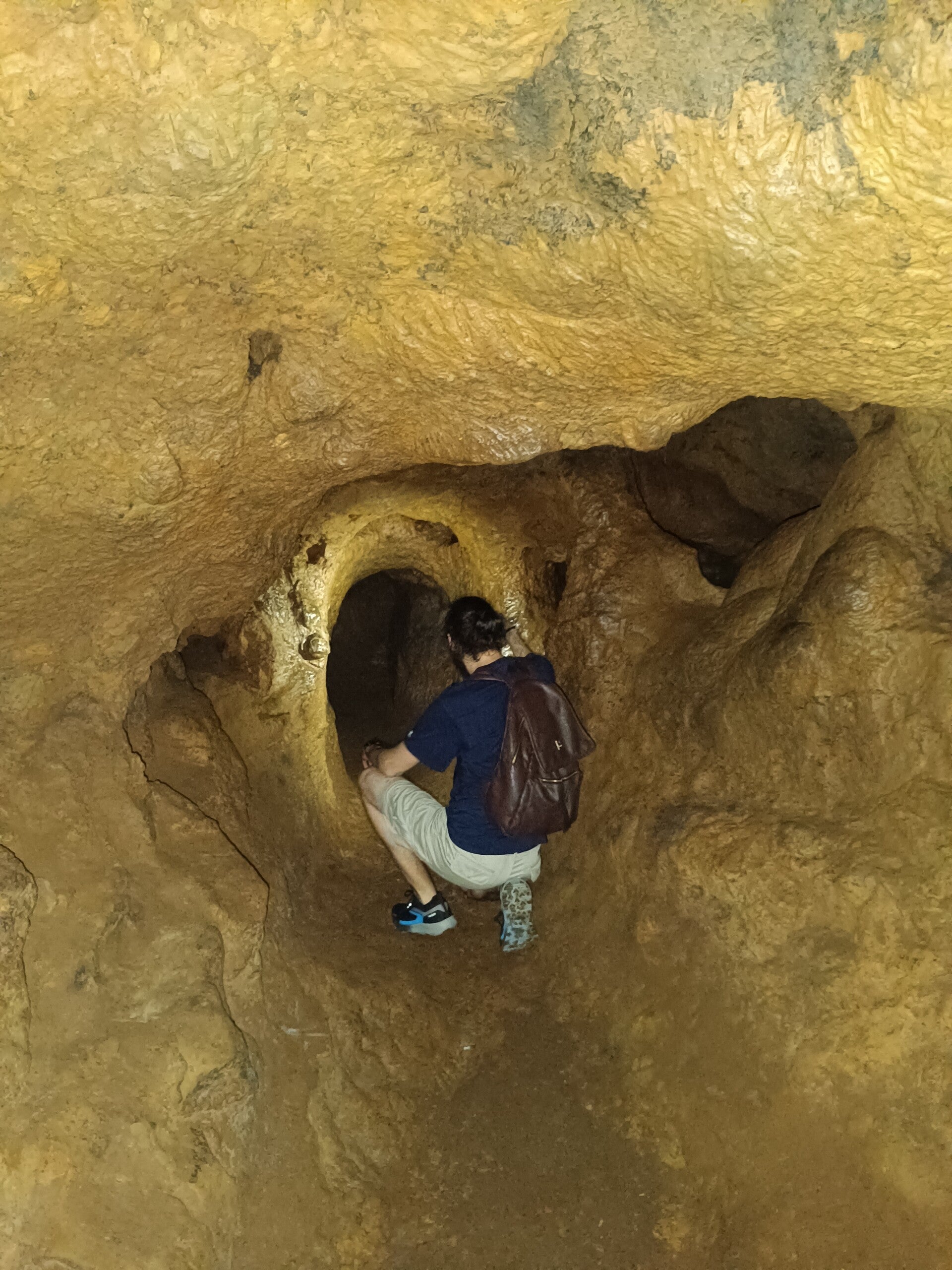
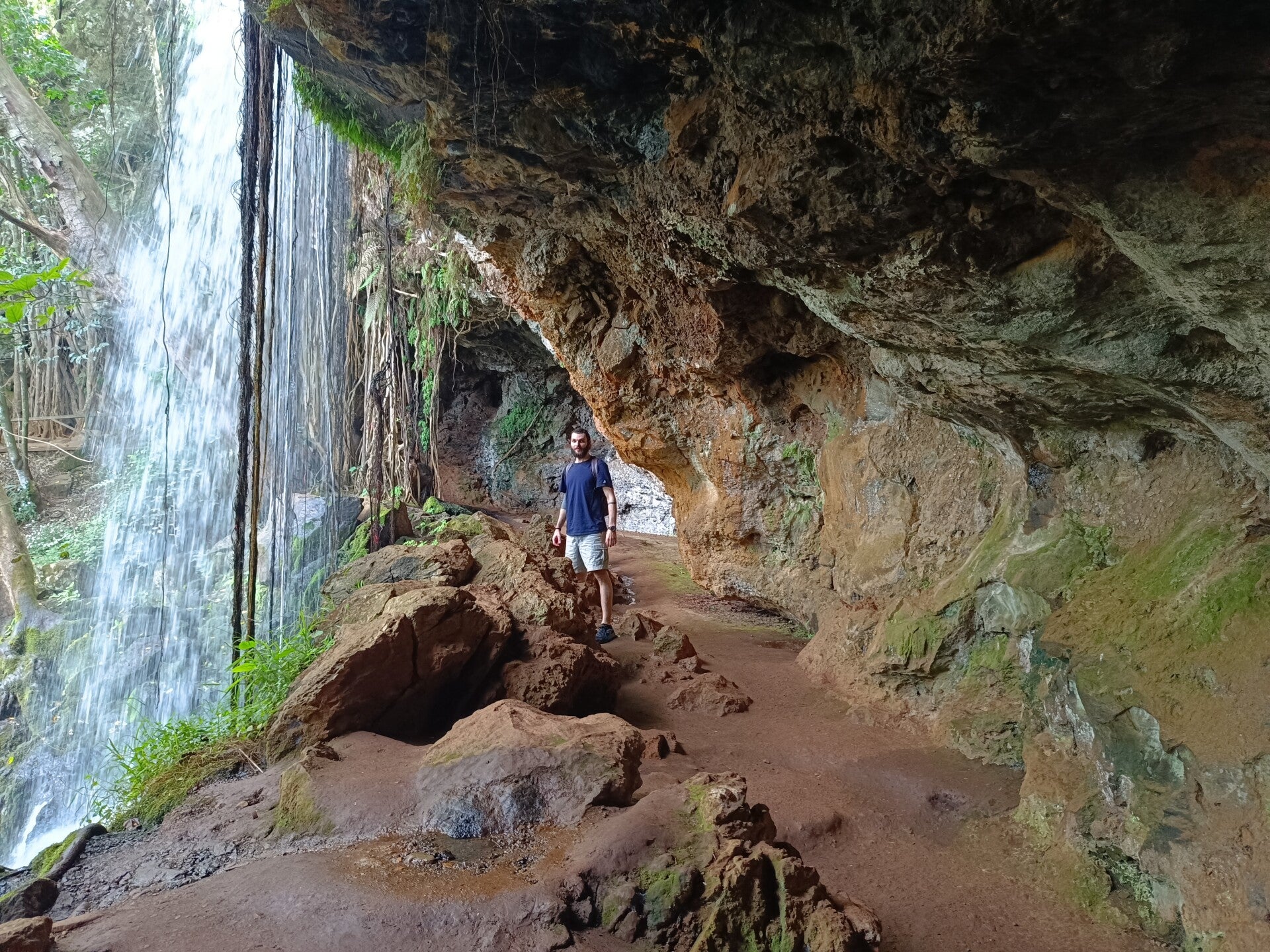


Paradise Lost, Kiambu county, Kenya, 2025
Toward Kongit
After a few more full days in Nairobi, filled with shared meals and small ceremonies of everyday life, the time came to leave the city behind. We ate beneath the trees of the Nairobi Arboretum, attended the graduation of Jacob, Linnet’s cousin (congratulations once more for this great milestone), and I met her uncle Jomba for the first time. Each moment felt like another thread quietly tying me into a family I was still learning to understand. Then one morning, it was time to go to Kongit.
We chose to fly to Eldoret. Linnet had never been on a plane before. For me, it was also new in its own way. The aircraft was not a jet, but a smaller plane that felt closer to the air itself. The flight was brief, a little rough, and undeniably interesting. Through it all, Linnet remained calm, even curious, looking out the window and smiling. Once again, she surprised me. There is a steadiness in her that reveals itself most clearly in unfamiliar situations.
≭
When we landed in Eldoret, something shifted. From that moment on, the journey belonged to the land. I had been waiting to see rural Kenya... so much. As we drove deeper through counties and smaller towns, the landscape opened up. Fields stretched wider, buildings thinned, and the rhythm of life changed. When we crossed into Bungoma County near Mount Elgon, children began calling out to me as mzungu more frequently. With each mile, the word echoed more often, and instead of discomfort, I felt a growing sense of joy and excitement. This was different from the city. It was direct, alive, unfiltered.
In Kimilili, we were met by Linnet’s sister Carol’s husband Isack, who kindly came to pick us up despite the long road still ahead. From there, the paved road slowly disappeared, replaced by red earth worn smooth by time and weather. We passed through Kapsokwony, already remote in feeling, but we did not stop. We continued upward, further into the highlands, toward the edge of the great forest of Mount Elgon.
The air felt cooler, heavier with green. As we climbed higher, I felt both awe and a growing nervousness. We were approaching the place where I would meet Linnet’s parents. The thought settled into me slowly. This was not a casual introduction. It was intimate, cultural, and deeply human. In the middle of remote rural Kenya, on roads that felt far removed from anything familiar, we were about to arrive.
I watched the landscape pass by and realized that this journey was not only about reaching a destination. It was about crossing a threshold. And with every turn of the road, we were getting closer.


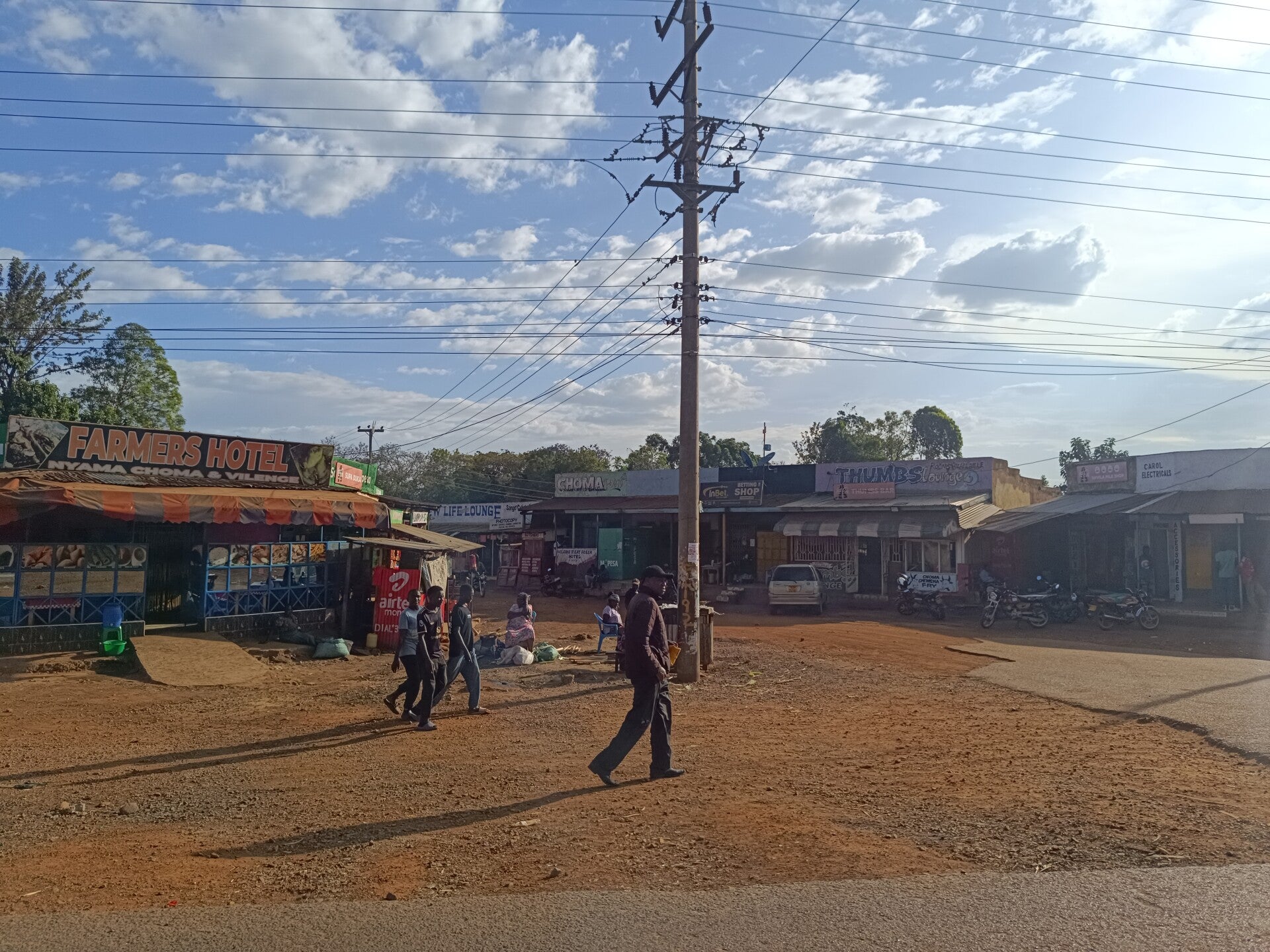


The journey to Kongit, Kenya, 2025
Family
We arrived in Kongit in the early evening. Darkness was slowly settling as we reached the family home. In the yard, under a canopy, people were already gathered, sitting on chairs and waiting. We had come late from Nairobi, and they had been there for some time. The atmosphere was calm, expectant, and warm.
The introduction began formally. The first words belonged to a priest, and then family members started introducing themselves one by one. There were around twenty people present that evening. As each person spoke, I felt the space opening, becoming softer. When it was my turn, I gathered my courage and began in Swahili, saying, “Habari, ninafurahi kukutana na ninyi.” The response came immediately, not in words, but in smiles. After that, I introduced myself properly and spoke about what Linnet meant to me. From that moment, the tension I carried began to loosen.
We moved into a humble, beautiful house, where the conversation continued. At first it remained formal, respectful, careful. With time, it became more open and friendly. I was served ugali, goat meat with vegetables, and later tasted local alcohol, both a clear spirit and a traditional wheat beer, usually shared through a straw. The gestures were generous and sincere.
Linnet’s parents and the entire family were kind and welcoming. My nervousness faded quickly. Over the days that followed, we grew closer. Despite the language barrier, I felt an immediate bond with her father. Even without many words, there was laughter, shared presence, and a sense of ease. He was warm, playful, and open. Her mother was equally kind, always smiling, always laughing in a way that felt genuine and deeply human. I found myself feeling truly happy in their presence.
The family was large, much larger than what I was used to in Europe. Many siblings, many connections. This was within the Sabaot people, part of the Kalenjin tribe, where family and clan play a central role. I was later introduced to the head of the clan and presented with the formal requirements for marriage. This meant meeting even more relatives, including two grandmothers and extended family members who lived further away.
Everywhere we went, I felt welcomed. Conversations flowed naturally, even when words were few. The experience was deeply cultural and profoundly moving. The way people related to each other, the importance of belonging, and the openness with which I was received left a lasting impression. The time I spent with Linnet’s family is something I will carry with me always, written firmly in both memory and heart.

Meeting the Parents
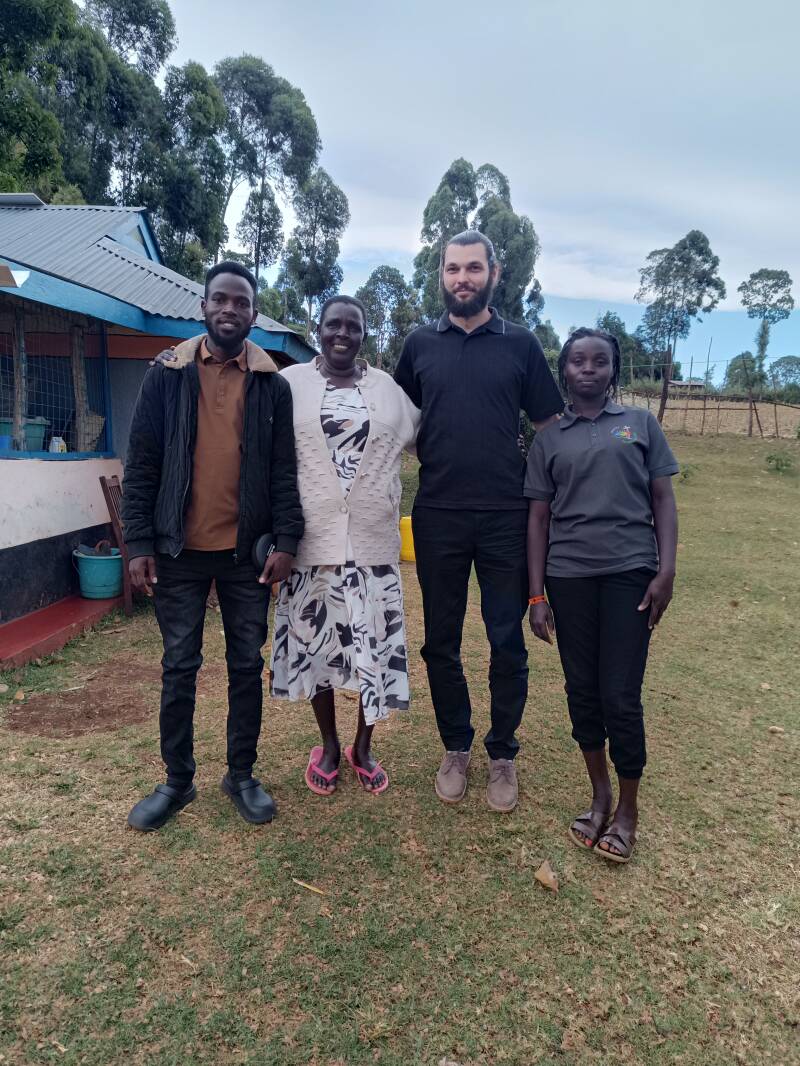
Meeting Grandmother in Kongit

Meeting Grandmother in Gitwamba
Kongit and Bungoma county
After settling into the rhythms of family life and tradition, our days began to take shape in simpler ways. We reconnected with Jacob, met Viola, Linnet’s cousin, and soon formed a small group together with Emmanuel, Linnet’s brother. Our mornings started early. We woke in our distant accommodation and walked through the fields back to the family home, where chapati and strong, sweet tea awaited us every morning.
From there, we decided each day as it came. Our first journey together led us to one of the highest points in the area. We walked through tea farms and villages, expecting a short hike. It turned into a full-day journey. We carried music, blankets, drinks, and a shared sense of excitement. Along the way, people greeted us, and children joined, following us for stretches of the path. It felt like a moving community, full of curiosity and joy. That walk is something I will never forget.
On other days, we took a scooter to Kapsokwony to buy food for dinner or to visit Carol at her husband’s tailoring shop. The evenings grew better with each passing day, filled with conversation and shared laughter. Nearby, the forest stretched toward the Ugandan border. One afternoon, we decided to explore it, but rain caught us on the way. We took shelter in the nearest humble house, where a man was eating potatoes. Without hesitation, he welcomed us in while we waited for the rain to pass. The moment was quiet, slightly surreal, and unexpectedly kind.
These journeys, small and large, formed the heart of my time in Kongit. Moving through the land, sharing days with our small kvintet group, and being welcomed wherever we went created a feeling of belonging I had not anticipated. It was a time of simplicity, connection, and quiet joy, one that stays with me long after leaving.


Kongit and Bungoma county, Kenya, 2025
Beneath Mount Elgon
One of the journeys I hoped we would take was to Mount Elgon National Park, to see the Kitum Caves. I suggested it almost casually, half-expecting hesitation. Instead, the idea was accepted without question. I was grateful for that openness. Some plans reveal themselves only when others are willing to follow them.
On the map, the caves looked close. In reality, the journey took nearly three hours by motorbike. We hired two bikes so our small group could travel together, setting off early in the morning. The ride was long, dusty, and occasionally rough, but I enjoyed every minute of it. The shared excitement carried us forward. Even after hours on the road, the thrill did not fade.
After several stops, we reached the entrance to the national park. Our guide was knowledgeable and patient, explaining the land, the animals, and the history of the place as we walked. Our first stop was the Elkony Waterfall, hidden deep within the forest. I liked that place immediately. It felt untouched, beautiful.
From there, we continued toward the Kitum Caves. For a very long time, these caves have been shared by humans and elephants. Even today, elephants still enter them, using their tusks to carve into the stone as they reach for the mineral-rich volcanic ash inside. The walls bear their marks. Deep scratches run along the rock, left by generations of animals moving through darkness with purpose and memory.
Inside the cave, the air was cool and still. Bats rested above us, the silence broken only by footsteps and breath. At one point, we came across elephant remains. Standing there, surrounded by stone shaped by life and loss, the place felt intensely alive. It was unsettling, but not in a frightening way.
There are stories tied to the cave as well. Local legends say that people from the Luhya community in Bungoma believe the cave would collapse on them if they entered. Another story warns that siblings should never enter together, or they may never find their way out. Jacob reminded us of this with a nervous smile before stepping inside anyway. He did make it out, which we took as a good sign.
Places like this stay with me. They carry layers of time, use, belief, and presence that cannot be reduced to facts alone. I am grateful we experienced it together, with curiosity and respect.
On our way back, the landscape opened again. We saw zebras, buffalo, and antelopes grazing near a school. Children played football nearby, glancing at me and calling out mzungu, even as extraordinary wildlife moved quietly behind them. The contrast was striking and beautiful. For them, this was simply home.
As we rode back, dust settling behind us, I felt deeply content.


Mount Elgon National Park, Kenya, 2025
Leaving, Carrying Forward
The final day arrived quietly. Too quietly. In the early morning darkness, we prepared to leave Kongit and catch the bus in Kimilili. Goodbyes came one by one, slower than arrivals. What had formed over those days was not something that could be packed or explained. It was a deep bonding, built through shared time, presence, and trust. Leaving felt heavy. I carried many moments inside me, knowing they would surface again later, unexpectedly.
≭
From there, we returned to Nairobi. The city welcomed us back with movement and noise, but our days together were still full. We visited the planetarium, learning about constellations and supermassive black holes, watching Linnet stare upward in quiet amazement. Seeing her overwhelmed by wonder was something I will always treasure.
We went to the Carnivore restaurant, where I tasted crocodile, ostrich, and ox balls, an experience I approached with curiosity and a bit of hesitation. Some things challenge both appetite and imagination. We laughed through it. We explored the Museum of Illusions, where perception bent and played tricks on the mind, and later tried virtual reality. Linnet moved through it with ease and calm. I did not. Once again, she surprised me.
Every day felt full, not because of what we did, but because we were doing it together. Slowly, inevitably, the moment came when there was no more time to fill. Saying goodbye was deeply difficult. We had built something real, something grounded in shared experience and mutual understanding. Leaving did not undo that. It only made it clearer.
As I boarded the plane home, I felt changed. Not dramatically, not loudly, but in a way that settles deep and stays. This journey gave me more than memories. It gave me clarity, emotional weight, and ideas that are still forming. Somewhere within them, a new story is beginning to take shape. It is not ready yet, and it does not need to be. Some things need time, distance, and quiet before they can be written.
What I know is this. The time we shared will remain with me. In my thinking. In my work. In whatever comes next...

Museum of Illusions

Carnivore Restaurant

Nairobi Planetarium
The Last Words
This journey will not turn into a travel record, nor is it meant to stand on its own.
It belongs to a longer process of observing, listening, and allowing experiences to shape ideas before they take form. Some moments stay personal, others slowly find their way into stories.
For now, this cycle is complete, carried forward quietly into what comes next...
≭

Add comment
Comments